
Seven Things That Used to Be Selling Points. Now They're Just Expected.
A few years ago, a residential developer could lead with "wellness amenities" and call it differentiation. Or "sustainable design." Or "branded operations." Today, those aren't differentiators. They're table stakes. The bar has moved. What used to be the upgrade is now the floor—seven of those shifts, and what they mean for how buyers evaluate a residence today.
1. Privacy as the Setting, Not the Feature
A gate used to be enough. Door staff. A key fob. Now buyers ask whether the property itself is built around privacy, whether the geography, density, and layout actually deliver it without needing fences to enforce it.
That's why low-density island and shoreline developments are picking up momentum. Privacy isn't an amenity. It's the setting. At Emerald Caye, the residences sit within a planned, low-density private island environment; the privacy is structural, not added on.
2. Indoor-Outdoor That Actually Works
The "indoor-outdoor flow" line has been on real estate brochures for two decades. Buyers have stopped taking the words at face value. What they look for now is the working version: terraces sized for actual use, openings that genuinely open, ventilation that doesn't depend on AC, light that moves through the home across the day.
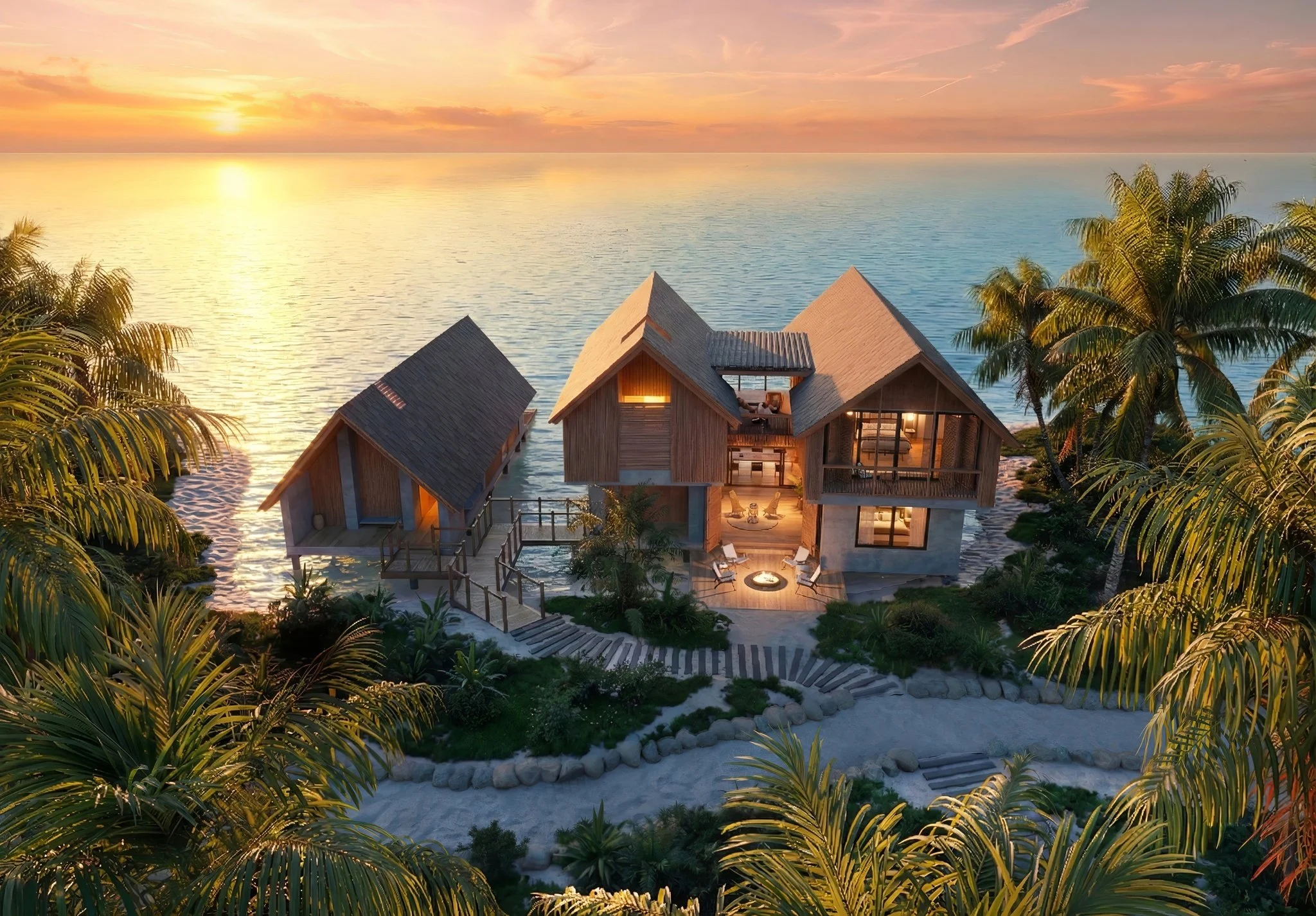
The structural details, not the marketing photos. You can see how this shapes The Residences at Emerald Caye, where the architecture is built around ventilation, views, and water access rather than their appearance.
3. Wellness Built Into the Home, Not the Spa
Five years ago, "wellness" meant a spa wing. Today, wellness means the home itself supports the routines, sleep quality, daily movement, recovery, time outside, and time off screens.
The spa is fine. It's not enough. Buyers now evaluate whether the residence supports the way they actually want to live. That shift maps to what we've written about how design and environment work together at Emerald Caye, where the architecture and the surroundings are working in the same direction.
4. Direct Water Access, Designed for It
Waterfront as a category has fragmented. A pool with an ocean view isn't the same as a residence that opens onto the water. An overwater villa isn't the same as a beachfront unit. Buyers now sort across those distinctions.
Overwater design homes built directly onto the water rather than next to it have become a sub-category of their own. The appeal isn't the view alone. It's the way the home interacts with the water at every hour of the day. The branded Six Senses residences at Emerald Caye are designed for that interaction, not photographed for it.
5. Environmental Design as Risk Management
Sustainability used to be sold as a values statement. It still is. But it's also become a risk question. Buyers thinking about a property they'll hold for decades now ask about elevation, storm exposure, water table, ecosystem health, and how the site was selected. Environmentally conscious design isn't only a virtue marker — it's part of how the residence stays usable over time. At Emerald Caye, site selection and construction methods are built around that long view.
6. Experiences That Don't Require Assembly
The original ownership model assumed the owner would source their own lifestyle, bring their staff, book their own activities, and organize their own routines. That model is fading. Buyers now expect that the experience layer is already in place: dining, wellness programming, water activities, and gathering spaces. Not in the form of a constant cruise-ship schedule, but available without effort when wanted. The experiences at Emerald Caye work that way, built into the island environment, not bolted on to it.
7. Brand as Operational Insurance
For international buyers, especially, a brand on the building used to be a signal — a sign of category. Now it's increasingly an operational guarantee.
The question buyers ask isn't "Is this brand prestigious?" It's "if something needs to be handled, will it be?"
That's what's driving the rise of branded residences, not the cachet of the name, but the predictability of what the name signals about how the place is run. The branded Six Senses residences at Emerald Caye operate under the same standards Six Senses applies across its hotels and resorts.
Why This Adds Up
The bar moved because the buyer changed. The market is now selecting for residences that actually deliver on what used to be brochure language. What that means for developments competing for these buyers: the seven items above aren't a feature list anymore. They're a starting point.
If you're sorting through what a residence at Emerald Caye looks like at this level of detail, the team can walk you through it.
Frequently Asked Questions
What do buyers look for in a residence today?
The list is longer than it used to be — privacy that's built into the setting, design that actually works with the environment, wellness integrated into the home, direct water access, environmental risk management, experiences available without effort, and operational consistency from a brand they trust.
Why are overwater residences becoming a category of their own?
Because the format is different from beachfront in ways buyers now distinguish — the home interacts with water directly, the privacy between residences is structural, and the daily experience tracks the water across hours and seasons.
What makes Belize part of this conversation?
Belize offers a setting that supports several of the shifts above at once — low-density development, environmental stability, branded residences, and a pace buyers are looking for in long-term ownership.
Are wellness features still a differentiator?
In isolation, no, they've become baseline. What still differentiates is whether the wellness layer is integrated into how the home functions day-to-day, rather than contained in a separate spa.
What are branded residences?
Homes operated under the standards of an established hospitality brand. The brand provides operational consistency, service infrastructure, and a managed structure across the residents' lives.
Where can I learn more about ownership at Emerald Caye?
The Emerald Caye FAQ page covers the ownership and development details. The rest happens in a private conversation with the team.
